Google Just Bought 890 MW of Nuclear Without a New Reactor
Google and Constellation signed a 20-year deal for 890 MW of nuclear uprates at 11 PJM reactors. The cost per megawatt, and what PJM's queue says about why.
On October 6th, Google and Constellation announced a 20-year power purchase agreement for 890 MW of new nuclear capacity on the PJM grid.
No new reactor. No new site. No decade-long construction schedule.
The 890 MW comes from uprates at 11 Constellation reactors across six operating plants in Illinois, Pennsylvania and New Jersey. The first uprate is expected by 2028, and Google says all 890 MW will be on the grid before the end of 2032. For anyone who has tried to bring firm power online in PJM lately, this is the most practical supply deal a hyperscaler has signed this year.
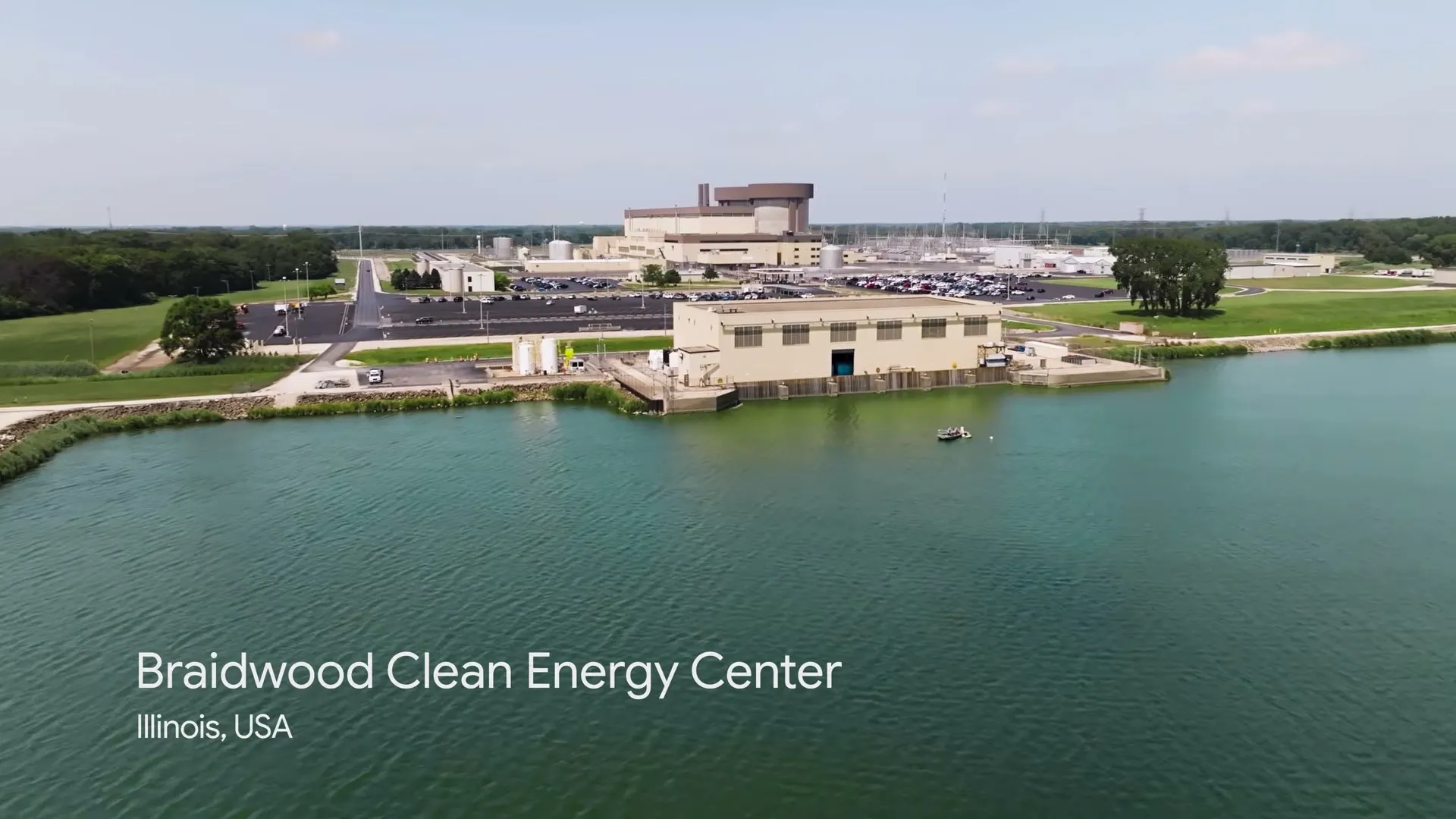 Braidwood Clean Energy Center in Illinois, the plant Google chose to film for the announcement. Image: Google / Constellation.
The short version
- 890 MW of uprates at 11 reactors across six plants, under a 20-year PPA.
- Constellation is committing more than $4.3 billion. First uprate by 2028, all of it before the end of 2032.
- A separate 15-year energy supply agreement covers 2,700 MW from Constellation’s existing PJM fleet.
- Constellation is deploying Google Cloud’s Gemini Enterprise to plan the uprates, manage construction and optimize plant output, under a five-year technology alliance.
- The companies say the deal sustains about 4,400 existing jobs and creates about 7,200 construction jobs.
- Google says this brings the new nuclear capacity it has enabled through uprates and restarts to more than 1.5 GW (Google’s post).
What an uprate actually buys
An uprate raises a reactor’s licensed output. Both companies name the same three scopes of work: turbines, steam generators and digital control systems. Newer turbine and generator equipment converts more of the reactor’s heat into power at the busbar. New steam generators and modern digital controls let the unit run safely at a higher rating.
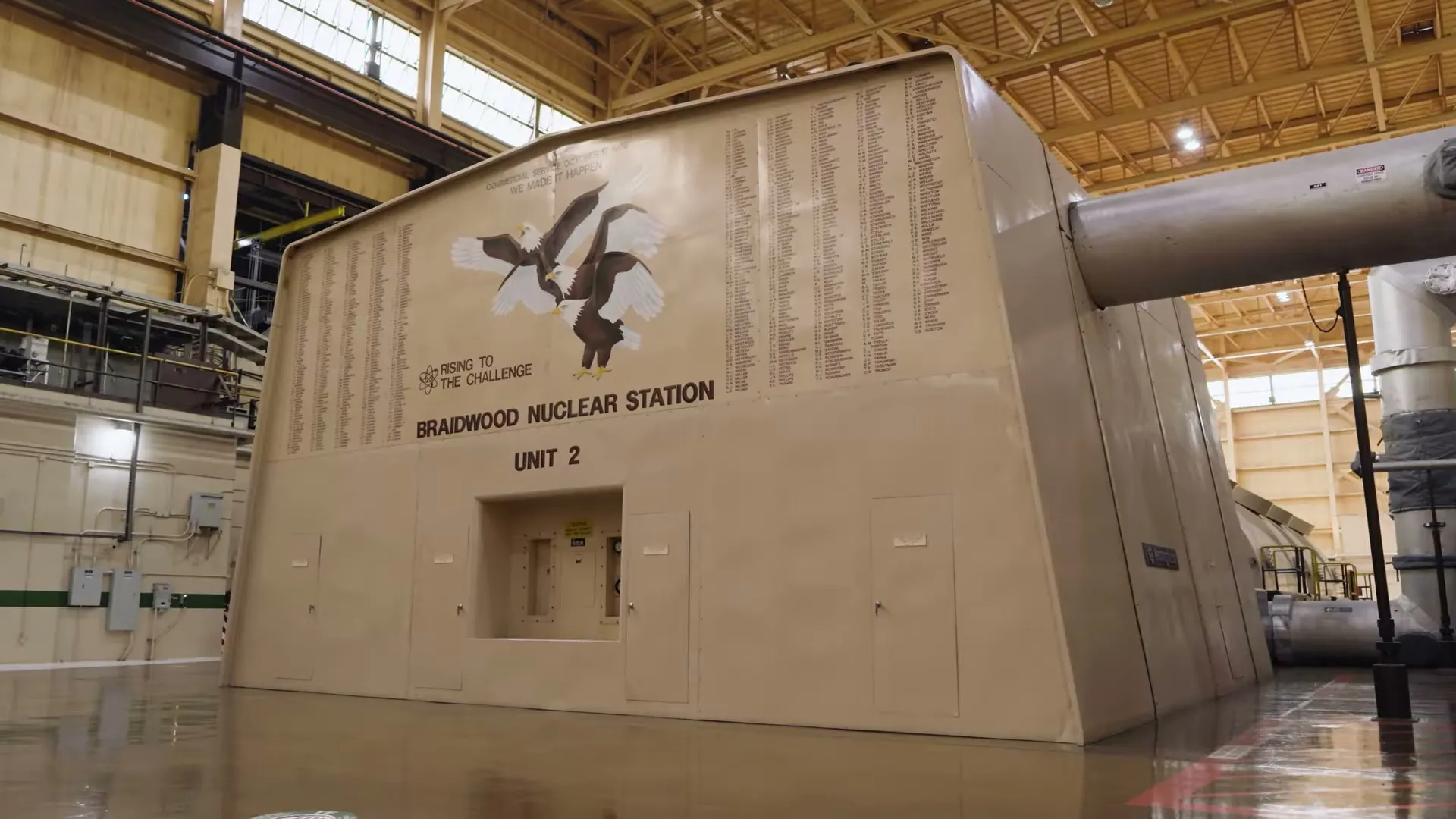 The Unit 2 turbine at Braidwood. Turbine upgrades are one of the three scopes of uprate work Google and Constellation name. Image: Google / Constellation.
Spread across 11 reactors, 890 MW averages about 81 MW per unit. That’s a realistic package of turbine and efficiency work on large reactors. It’s not a science project.
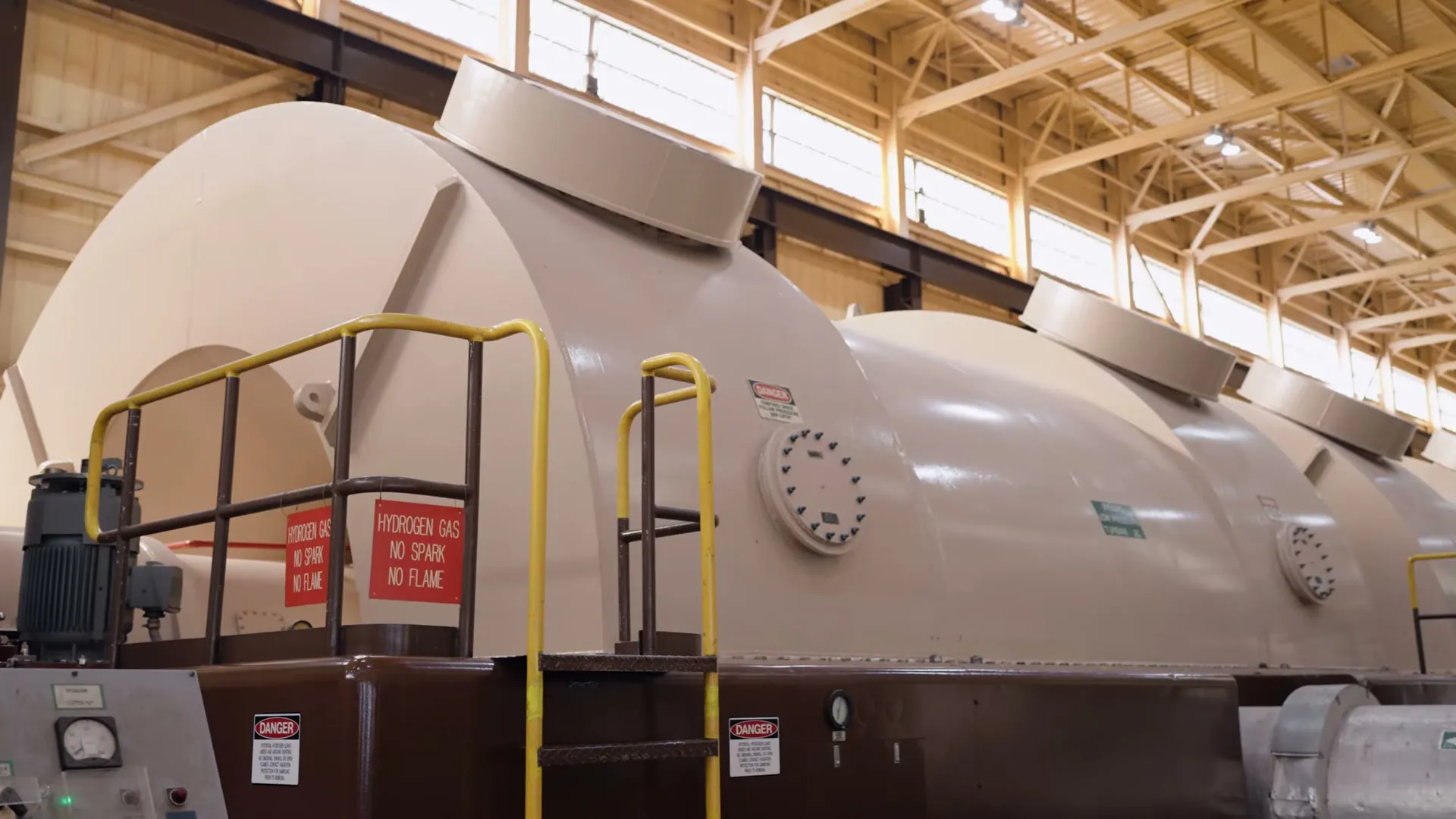 Turbine sections inside Braidwood’s turbine hall. Image: Google / Constellation.
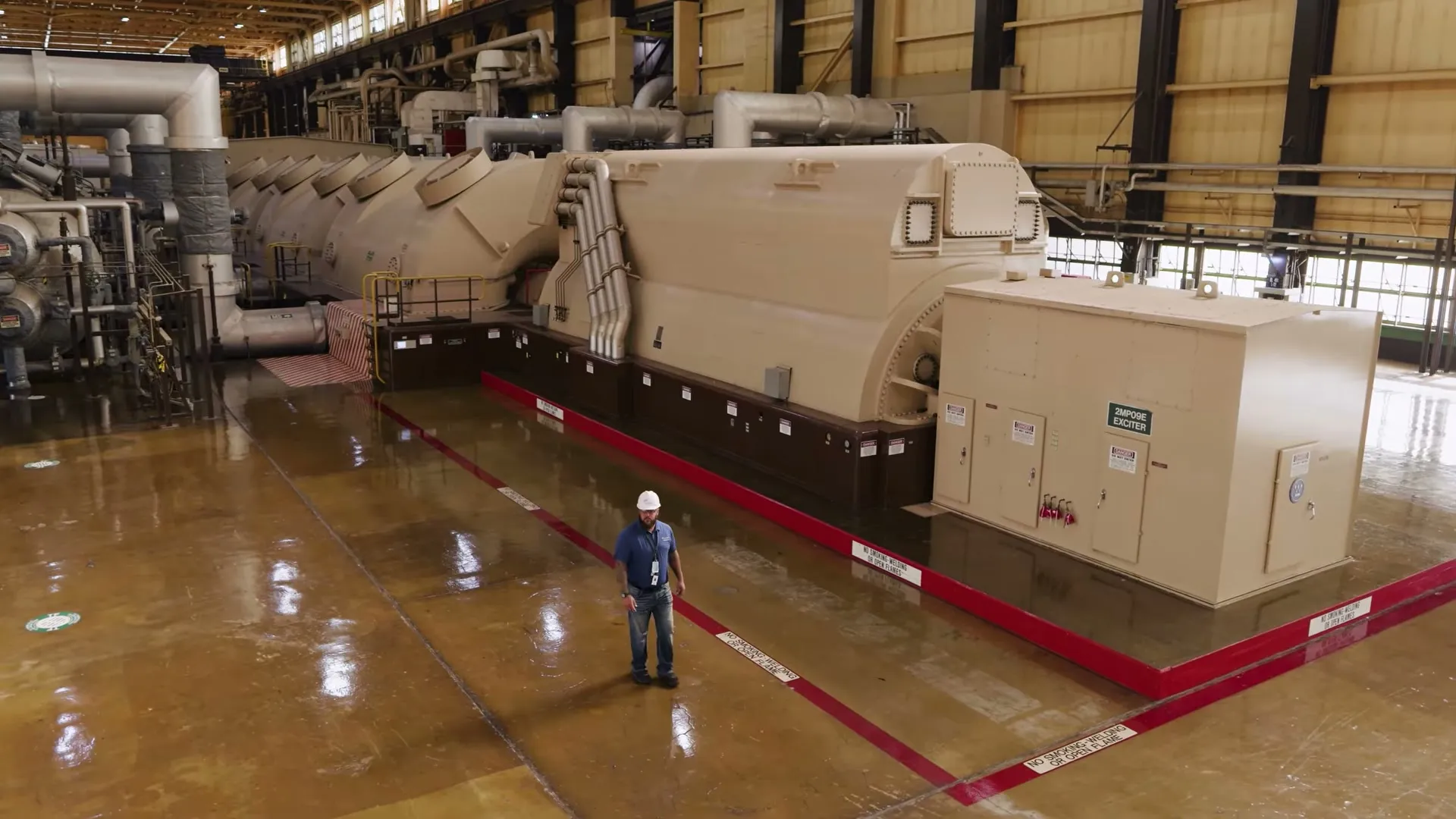 The full turbine-generator line at Braidwood, with a worker for scale. Image: Google / Constellation.
The cost per megawatt
$4.3 billion for 890 MW works out to about $4.8 million per megawatt.
The last large nuclear build in the US was Vogtle Units 3 and 4 in Georgia, which added about 2,234 MW for more than $30 billion. That’s more than $13 million per megawatt.
Same fuel. Same carbon-free baseload. Roughly a third of the cost per megawatt on the headline numbers, at plants that already have containment, cooling, a trained workforce and a grid connection.
Google puts it as roughly the equivalent of a new large reactor, delivered years sooner. The comparison holds. These megawatts come from plants that are running today, while most SMR designs have yet to produce a commercial megawatt.
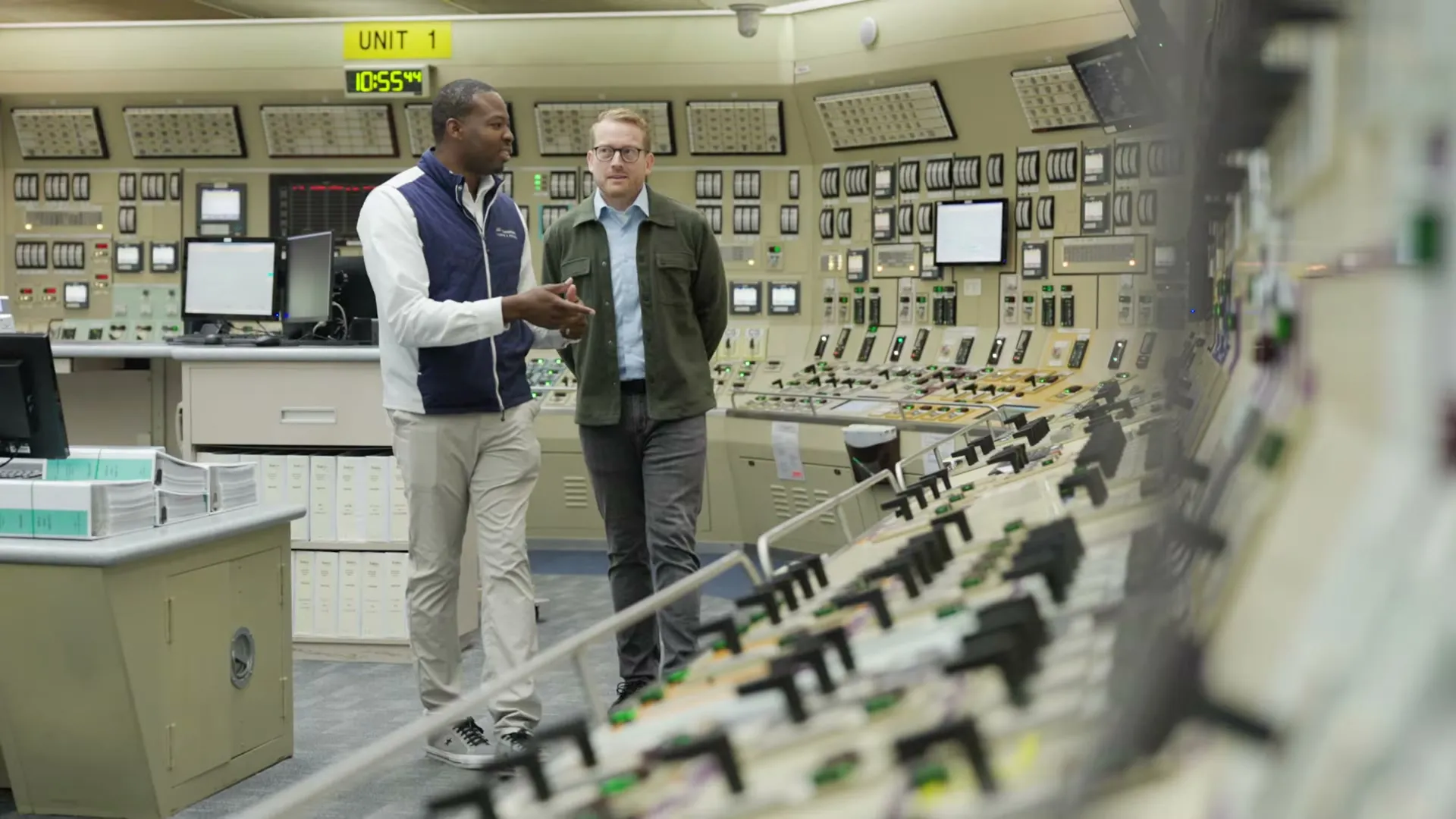 In the Braidwood main control room. Digital control system upgrades are part of the uprate scope. Image: Google / Constellation.
Why PJM, and why now
We pulled PJM from the FieldProspects database (data as of last week):
- 1,492 planned projects in PJM’s interconnection queue, totaling 260,258.9 MW.
- 413 of those projects, 63,483 MW, are already past their listed in-service date.
- 229,994.5 MW operating today across 4,056 units, 35,447.4 MW of it nuclear.
- Only 11 planned nuclear entries in the whole queue.
The second line is the one that matters. 63,483 MW of projects were supposed to be online already, and aren’t. That is what “wait for new supply” means in PJM right now.
Uprates don’t skip the queue entirely. The added megawatts still need interconnection positions. But they start from a live switchyard and an existing grid connection, not a greenfield site that needs network upgrades.
The data shows the pattern. PJM queue requests were filed in April 2025 at large nuclear stations: Byron on April 7th, Braidwood on April 8th, LaSalle and Salem on April 9th. Neither company has listed the six plants in this deal, so we are not treating those requests as this deal. But Braidwood is where Google shot its announcement film, and its 345 kV request is in the queue.
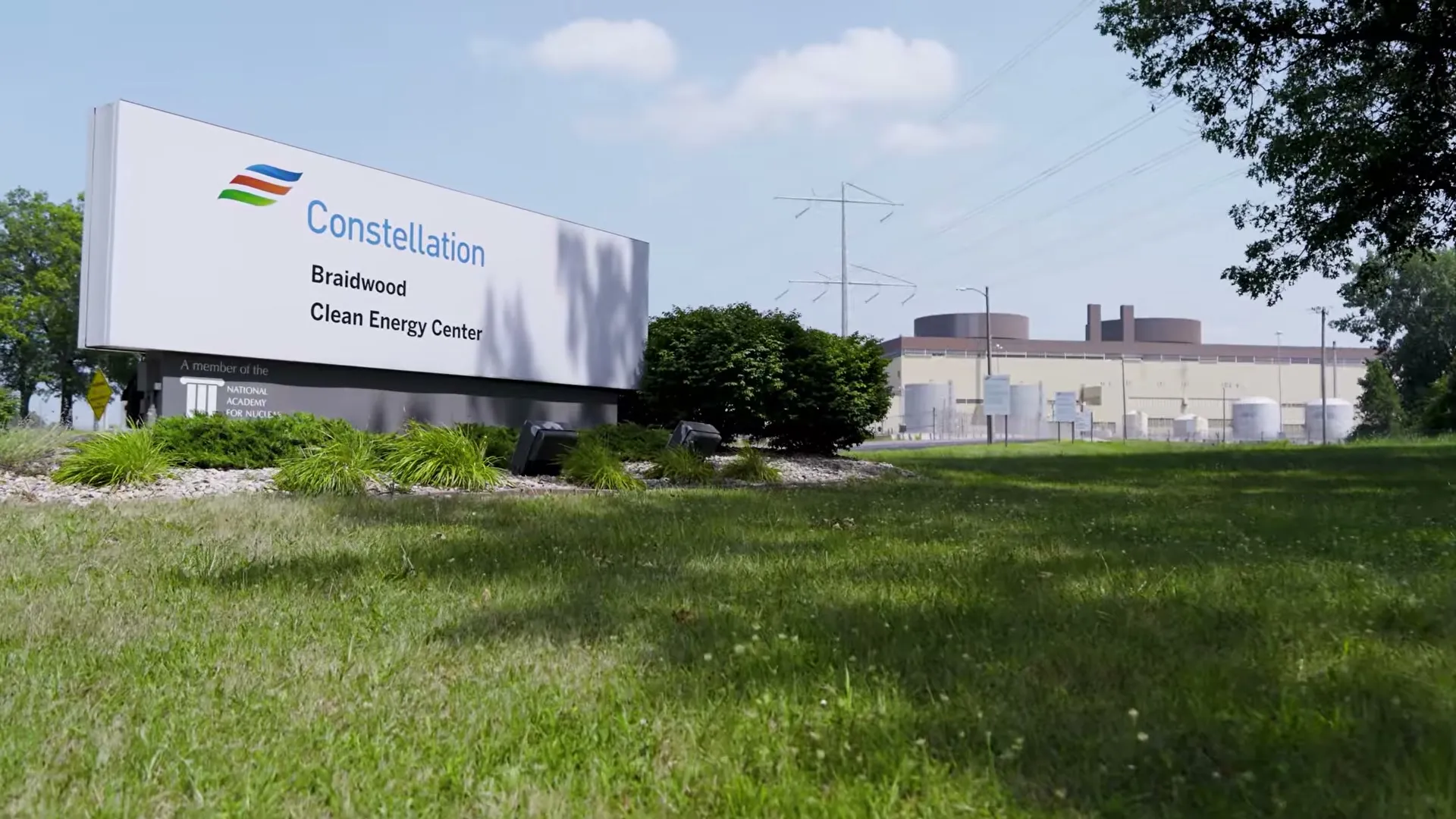 Braidwood Clean Energy Center. A PJM queue request at its 345 kV interconnection was filed on April 8, 2025. Image: Google / Constellation.
The demand side
PJM’s footprint covers Virginia, Ohio, Pennsylvania, New Jersey, Maryland, Delaware, West Virginia and DC. In those states, FieldProspects tracks 1,303 data center records that aren’t canceled, from planned through operating. The records that list a size add up to 122,473.2 MW.
Google’s share of that, counting records where Google is the developer, tenant or end user (see who is building data centers for the other big names):
- 20 operating sites in Ohio and Virginia, 1,726.6 MW
- 4 under construction, 379.1 MW
- 16 planned, most of which don’t list a size yet
So 890 MW doesn’t cover even the 1,726.6 MW of Google capacity already running in two states. It isn’t meant to. It’s one firm, clean, 20-year block in a portfolio, and it adds supply to the grid instead of contracting for output that already exists. That is the policy point. Google says other grid customers bear none of the uprate costs, and the deal is framed around PJM’s “Bring Your Own Power” proposal and the White House Ratepayer Protection Pledge.
The full breakdown is on the data center database page.
What the deal doesn’t settle
- The six plants aren’t named. Neither is the MW at each reactor. Until they are, nobody outside the two companies can check the numbers unit by unit.
- Most of the capacity lands late. First uprate by 2028, the rest by the end of 2032. That’s fast for nuclear and slow next to data center build schedules.
- Power uprates need NRC license amendments. The releases don’t say where those stand.
- “No cost to other ratepayers” is a commitment, not a tariff. It gets tested in rate cases and PJM capacity results, not in a press release.
- 890 MW is about 2.5% of PJM’s operating nuclear fleet. It helps. It doesn’t change the supply picture on its own.
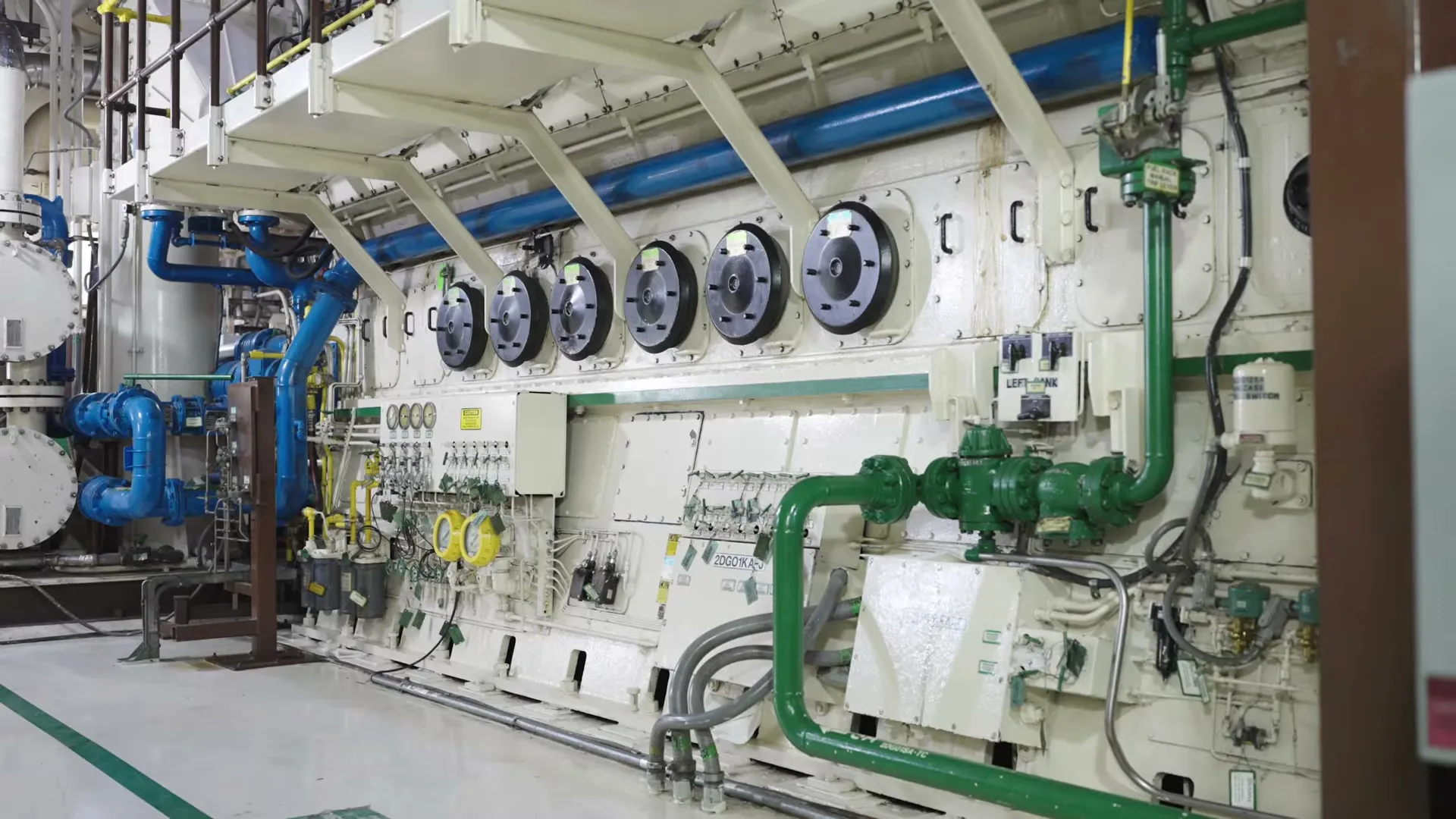 Plant equipment at Braidwood. Image: Google / Constellation.
Watch: Google at Braidwood
“Why we’re backing America’s existing nuclear plants,” Google Sustainability, filmed at Braidwood Clean Energy Center.
Our read
In power, the fastest capacity is the capacity you already own.
Existing site. Existing grid connection. Existing workforce. Google gets 890 MW of firm, carbon-free power for roughly a third of new-build cost per megawatt, and Constellation gets 20 years of contracted revenue to pay for the work. Both sides have reasons to repeat it.
Every large load with exposure to PJM should be looking at the same structure, and where to site the next data center now depends on it. The uprate potential at existing plants is finite, and the earliest buyers get the best units.
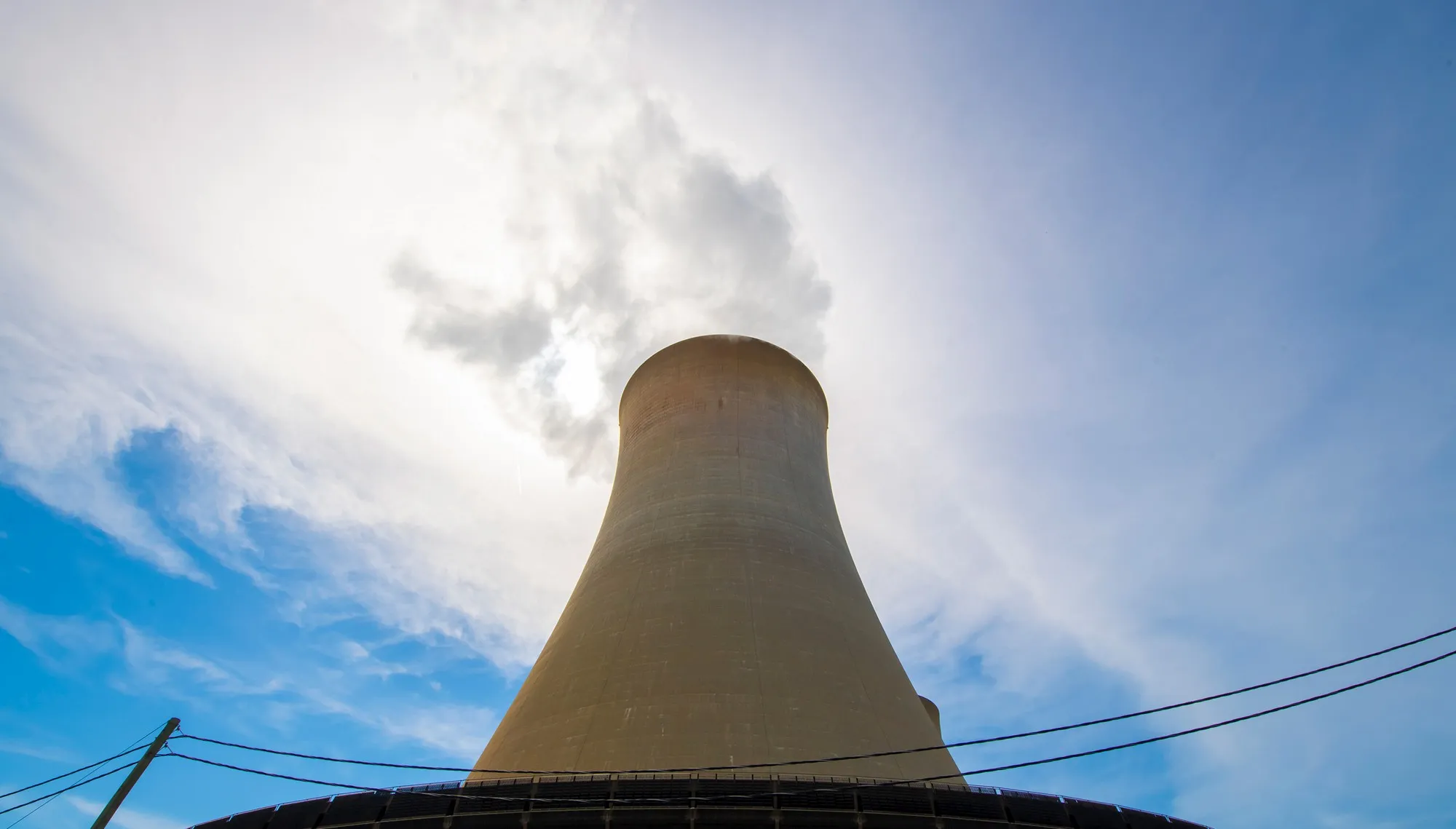 Image: Constellation Energy, from the announcement.
FAQ
What did Google and Constellation announce? A 20-year power purchase agreement for 890 MW of new nuclear capacity in PJM, created by uprating 11 reactors at six Constellation plants in Illinois, Pennsylvania and New Jersey. They also signed a 15-year energy supply agreement for 2,700 MW from Constellation’s existing PJM fleet, and a five-year technology alliance built on Google Cloud and Gemini Enterprise.
What is a nuclear uprate? An uprate raises the licensed output of an existing reactor. In this deal, the work covers turbines, steam generators and digital control systems. It adds megawatts without building a new plant. Power uprates need approval from the Nuclear Regulatory Commission.
When does the new capacity come online? The first uprate is expected by 2028. Google says all 890 MW will reach the PJM grid before the end of 2032.
How much is Constellation investing? More than $4.3 billion, which works out to about $4.8 million per megawatt of new capacity.